

With the accelerating nationwide trend towards electrification, more and more golf courses, resorts, and property management companies are shifting from traditional gasoline-powered utility task vehicles to more environmentally friendly and efficient EV utility task vehicles. As a professional manufacturer of electric utility task vehicles and utility vehicles, Tara is committed to driving technological upgrades in the industry, particularly in battery management, motor efficiency, and vehicle intelligence. This article will provide a comprehensive and professional reference for the golf industry, focusing on the technological advantages, application scenarios, core performance aspects, and common user concerns of EV utility task vehicles.
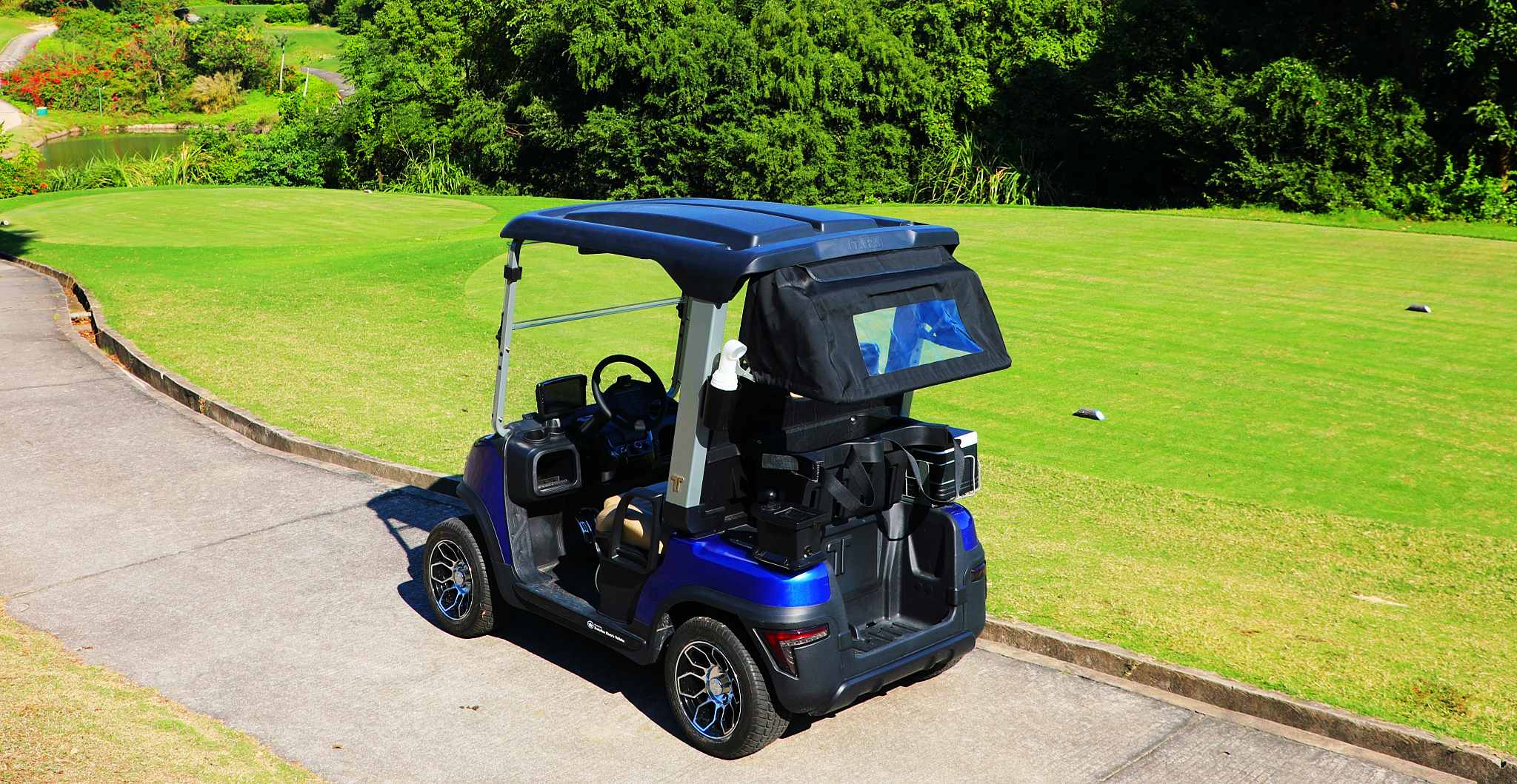
I. What is an EV utility task vehicle? Why is it becoming mainstream?
An EV utility task vehicle, or Electric Vehicle Utility Task Vehicle, uses a pure electric drive system, powered by an EV battery (usually a lithium battery) and an EV motor (a high-efficiency brushless motor). Compared to traditional gasoline-powered utility task vehicles, its biggest advantages are zero emissions, low noise, high efficiency, and lower operating costs.
Across the United States, electric utility task vehicles have become standard equipment on golf courses. Demand for EV utility task vehicles is rapidly growing due to increasing consumer environmental awareness and rising operating costs.
II. Core Technological Advantages of EV Utility Task Vehicles
1. High-Performance Lithium Battery for Longer Range
Modern EV utility task vehicles commonly use lithium utility task vehicle batteries, which offer the following advantages:
Higher charging efficiency, supporting fast charging
Higher energy density, longer range
Low self-discharge rate, less idle loss
Longer cycle life, lower overall operating cost
Tara’s lithium battery system has been validated in multiple markets, adaptable to high and low temperature environments, and employs an intelligent battery management system (BMS) that monitors voltage, temperature, and current in real time to ensure safety and reliability.
2. EV Motor Provides Smoother and More Responsive Power Output
Compared to the noise and vibration of traditional gasoline vehicles, EV motor-driven EV utility task vehicles offer quieter and smoother handling, making them suitable for golf courses and communities where comfort is paramount. Meanwhile, the instantaneous torque output of the electric motor provides the vehicle with stronger power on inclines, reducing wear and tear on the vehicle structure to some extent.
3. Easier Operation and Maintenance, Lower Overall Costs
No need to change oil
Minimum routine maintenance
Charging costs are far lower than fuel costs
Zero emissions enhance the environmental image of the golf course
For commercial operators, these advantages directly bring long-term economic benefits.
III. Typical Application Scenarios of EV Utility Task Vehicles
Beyond traditional golf courses, the application scope of electric utility task vehicles is constantly expanding:
Internal transportation within resorts
Patrol and property management in high-end residential areas
Player transportation at golf driving ranges
Internal commuting within parks, schools, and airports
Short-distance transportation services for medical institutions
Tara’s product portfolio includes 2-seater, 4-seater, 6-seater, and multi-functional rear-bed models, adaptable to multiple needs from leisure scenarios to commercial transportation.
IV. What Performance Should Be Focused On When Choosing an EV Utility Task Vehicle?
1. Battery Type and Range
The type of EV battery (lithium vs. lead-acid), its capacity, and safety technology directly determine its range and lifespan. The industry trend clearly favors lithium batteries.
2. Motor Performance and Control System
The rated power, peak torque, and controller tuning of the EV motor are crucial to the vehicle’s climbing ability and driving experience.
3. Braking and Suspension Structure
Utility task vehicles operate on various terrains and require:
A stable and durable suspension system
A sensitive and reliable front and rear braking system
A good center of gravity structure
Tara uses an aluminum frame in its chassis design and conducts multi-point testing to ensure vehicle stability on grass, slopes, and slippery surfaces.
4. Intelligent Vehicle Experience
Smart instrument panel, app monitoring, battery health reports, USB fast charging ports/wireless charging pads, and other features are becoming key user focuses.
V. FAQs
Q1: Is an EV utility task vehicle better than a gas utility task vehicle?
A: In most operating environments, EV utility task vehicles are indeed more advantageous. They are quieter, have lower maintenance costs, produce no exhaust emissions, and with the improvement of lithium battery technology, their range fully meets the needs of golf courses and commercial operations. Therefore, more and more golf courses are transitioning from gasoline-powered carts to electric ones.
Q2: How long does an EV battery last in an electric utility task vehicle?
A: Taking Tara’s lithium battery system as an example, it can last approximately 8–10 years under normal use. In comparison, traditional lead-acid batteries typically last 2–3 years, with significantly higher overall operating costs.
Q3: Can an EV utility task vehicle run on slopes?
A: Modern electric utility task vehicles mostly use high-torque EV motors, allowing for smooth driving on slopes up to 20 degrees. Tara models have specifically optimized controller tuning for hill starts, ensuring stable power delivery even on complex road conditions. Q4: What is the charging time of an EV utility task vehicle?
A: A full charge typically takes 6–8 hours, while fast-charging lithium-ion systems can reach 80% in 4–5 hours. Charging time varies depending on the EV battery capacity and charger power.
VI. Tara: A Trusted EV Utility Task Vehicle Manufacturer
As a professional electric utility task vehicle manufacturer, Tara consistently adheres to stringent standards in batteries, motors, chassis, safety structures, and product stability. We collaborate with distributors nationwide to provide safe, reliable, and cost-effective EV utility task vehicle solutions for golf courses, hotels, resorts, and commercial venues.
In the future, with the further development of new energy technologies, electric utility task vehicles will not only serve golf courses but will also become an important part of short-distance transportation. Tara will continue to innovate, providing customers nationwide with more efficient, durable, and intelligent electric vehicles.
Post time: Dec-01-2025