

In modern golf courses and various application scenarios, utility task vehicle seat belts have gradually transitioned from an “optional feature” to a “standard safety feature.” Whether for course operations, resort shuttles, or short-distance community travel, installing utility task vehicle seat belts effectively improves passenger safety and reduces potential risks. Therefore, for managers purchasing electric utility task vehicles or planning utility task vehicle fleets, safety features have become a crucial consideration.
As industry standards continue to improve, more and more utility task vehicle manufacturers are incorporating seat belts into their standard designs to meet the safety needs of different markets.
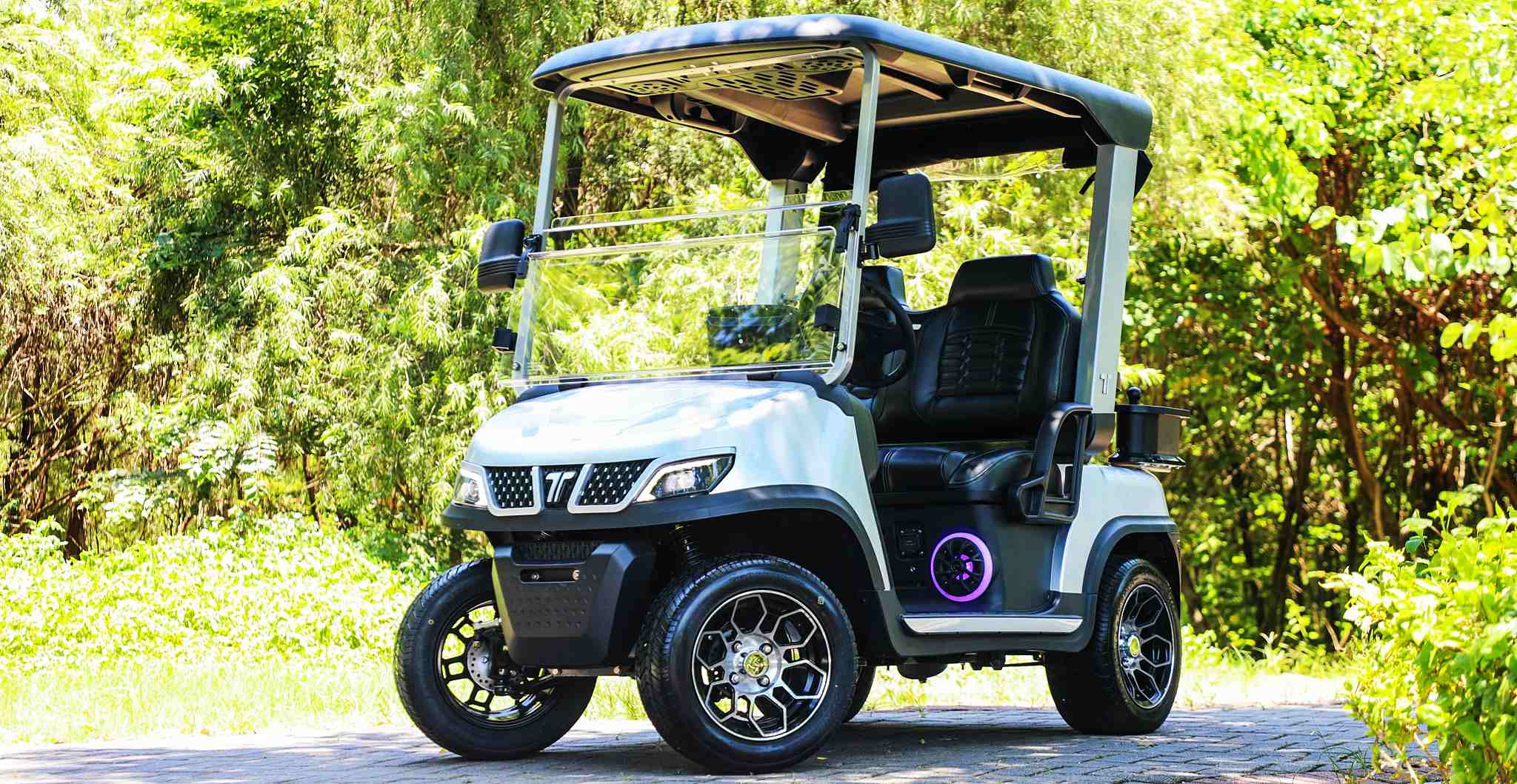
Why are utility task vehicle seat belts becoming increasingly important?
Traditionally, utility task vehicles are perceived to travel at relatively low speeds, so safety features are often overlooked. However, in actual use, the following situations pose potential risks:
Slopes or slippery surfaces on the course
Sudden acceleration or braking
Multiple passengers
In these situations, utility task vehicle seat belts can effectively secure passengers and reduce the likelihood of accidents.
Furthermore, in some countries and regions, the installation of seat belts has become a compliance requirement, especially in utility task vehicles used on public roads or in open communities.
Electric Utility Task Vehicles and Safety Design Upgrades
With the increasing popularity of electric utility task vehicles, vehicle design is constantly being upgraded, with safety becoming a key focus.
Modern electric utility task vehicles typically include the following safety features:
Seat belts
Passenger armrests
Anti-slip seat design
Stable chassis structure
Optimized braking system
Among these, seat belts are one of the most direct and effective safety measures. Their effectiveness is particularly evident in scenarios with multiple passengers or high-frequency use.
The Significance of Seat Belts in a Utility Task Vehicle Fleet
For courses or operators with a complete utility task vehicle fleet, the standardized configuration of utility task vehicle seat belts is of great significance.
Improving Overall Safety Standards
Reducing the risks arising from the lack of safety features in individual vehicles.
Reducing Management Difficulty
Unified standards facilitate training and management.
Enhancing Customer Trust
Vehicles with comprehensive safety features are more likely to gain user acceptance.
Therefore, during fleet procurement or upgrades, more and more managers are requiring seat belts as a standard configuration.
Do Utility Vehicles Also Need Seat Belts?
Besides personnel transport vehicles, utility vehicles also require seat belts in certain scenarios.
For example:
Staff inspections
Carrying passengers during equipment transport
Operating on ramps or complex terrain
In these situations, installing seat belts can further ensure operator safety. Therefore, some high-standard operating sites also equip utility vehicles with relevant safety devices.
How to Choose the Right Utility Task Vehicle Seat Belts?
When choosing utility task vehicle seat belts, the following factors need to be considered:
Installation Method
Compatibility with existing electric utility task vehicle structures.
Durability
Materials must be wear-resistant and weather-resistant.
Comfort
The design should be convenient for passengers and not affect the riding experience.
Compliance
Meets the safety standards of the target market.
Through appropriate selection, safety can be significantly improved without compromising the user experience.
Frequently Asked Questions (FAQ)
Are utility task vehicle seat belts mandatory?
Yes, they are mandatory in some markets or usage scenarios, especially in public areas or commercial operations.
Are all electric utility task vehicles equipped with seat belts?
Not all, but an increasing number of utility task vehicle manufacturers are offering them as standard or optional.
Can they be added later?
Most utility task vehicles support the addition of seat belts, but it is essential to ensure that the installation method meets safety requirements.
Will seat belts affect the user experience?
No. Properly designed utility task vehicle seat belts are easy to use and will not affect passenger comfort.
Safety Standard Upgrade
As safety requirements in golf courses and related settings continue to increase, utility task vehicle seat belts are becoming an indispensable and important feature. They not only effectively reduce risks but also improve overall operational efficiency and user trust.
By standardizing the installation of seat belts on electric utility task vehicles and some utility vehicles, and combining this with standardized management, operators can build a safer and more professional utility task vehicle fleet.
For golf courses and commercial venues that pursue high standards of service, incorporating utility task vehicle seat belts into their vehicle configuration system has become an important step towards standardization and professionalism.
Post time: Apr-11-2026