

Does Inexpensive Utility Task Vehicle mean performance compromise?
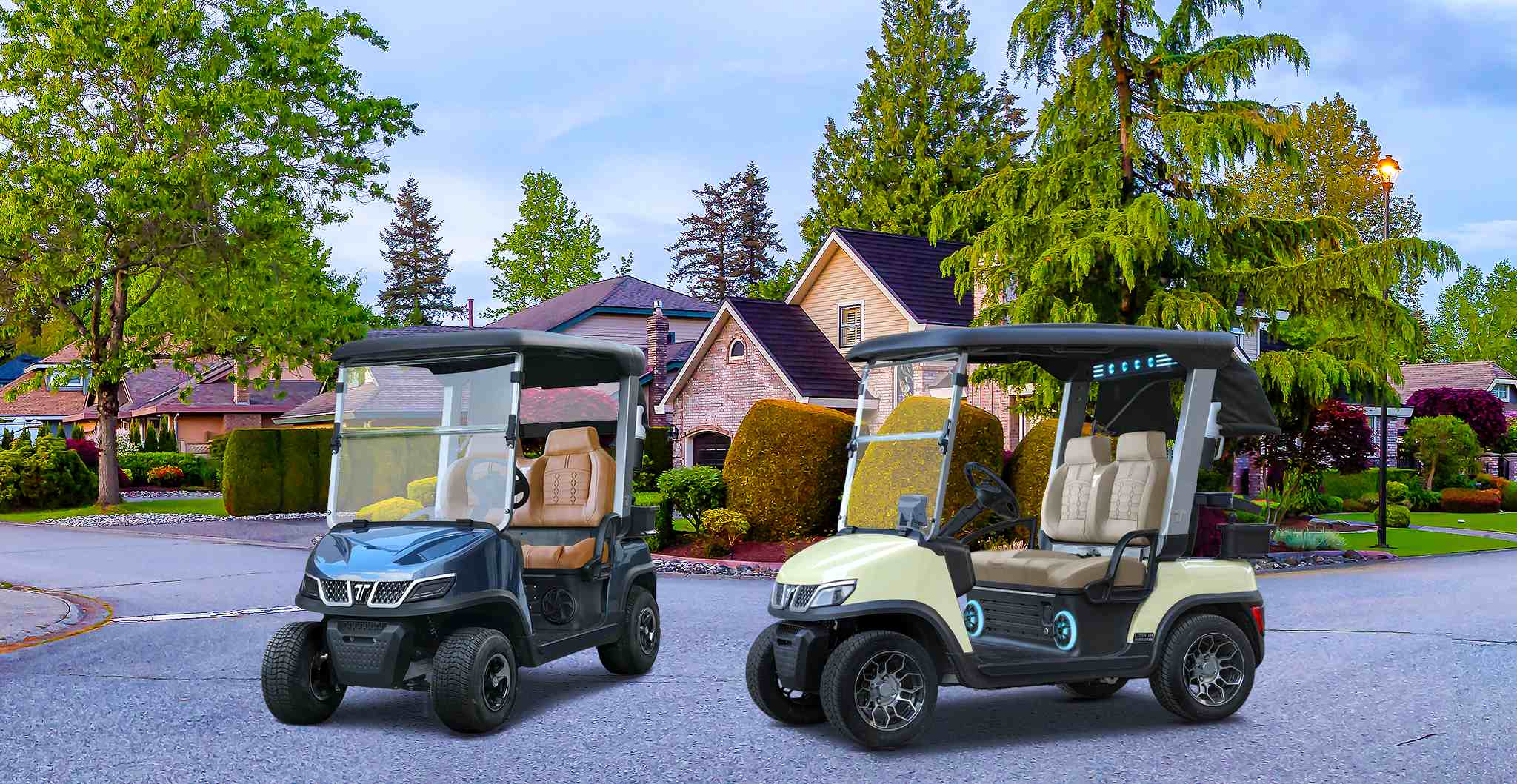
The answer is no. For golf courses, resorts, and gated communities, Inexpensive Utility Task Vehicles do not equate to low quality. Rather, they refer to utility task vehicles that meet usage requirements and safety standards while balancing reasonable pricing, reliable performance, and sustainable operating costs. By choosing the right electric system, configuration, and application scenario, many courses can achieve efficient operation while controlling their budget.
Why is the market demand for Inexpensive Utility Task Vehicles continuing to grow?
As the number of golf courses, resort properties, and leisure parks increases across the United States, operators’ focus on vehicles is changing. In the past, the emphasis was on “luxury,” but now the focus is more on return on investment (ROI).
In actual operation, vehicle costs include not only the purchase price but also:
Daily energy consumption
Maintenance and parts replacement
Lifespan
Hidden losses due to downtime or malfunctions
Therefore, truly inexpensive utility task vehicles are often electric utility task vehicles with lower overall costs, rather than simply the lowest-priced model.
How do electric utility task vehicles achieve “price friendliness”?
Long-term advantages of electric systems
Compared to gasoline-powered vehicles, electric utility task vehicles are easier to control costs over the long term:
Electricity costs are lower than gasoline
Simpler structure, lower maintenance frequency
No engine fluid system, fewer maintenance items
For courses with frequent daily use, this cost difference will gradually become apparent over 2-3 years, making the vehicle more in line with the definition of an inexpensive utility task vehicle.
Appropriate configuration is more important than “full functionality”
Many courses do not need high-end entertainment systems or complex electronic modules. Choosing configurations focused on practicality, such as:
Basic instruments
Stable motor and battery system
Durable tires
This can effectively reduce initial purchase costs while ensuring stable daily operation.
Synergistic Value of Golf Courses and Utility Vehicles
In real-world scenarios, single-purpose vehicles often cannot meet operational needs. Integrating utility vehicles into the overall procurement plan is a crucial way to reduce overall costs.
Utility vehicles can be used for:
Lawn maintenance and tool transport
Course patrol
Event and activity support
When utility task vehicles and utility vehicles are used on the same platform or with a similar architecture, parts commonality is higher, maintenance efficiency is better, and this further enhances the overall value of inexpensive utility task vehicles.
What factors determine whether a vehicle is truly “inexpensive”?
1. Service Life
A low price but a short service life increases replacement frequency and drives up total costs.
2. Maintenance Ease
Standardized parts and a clear structural design can significantly reduce repair time.
3. Energy System Selection
Between lead-acid batteries and lithium-ion batteries, a rational choice should be made based on usage frequency and budget, rather than blindly pursuing the lowest price.
4. Course Suitability
Match the fairway width, slope, and usage intensity to avoid wasted or insufficient performance.
FAQs
Q1: Are Inexpensive Utility Task Vehicles suitable for professional golf courses?
Yes. As long as the vehicle meets the course standards in terms of speed, safety, and load capacity, reasonably priced electric utility task vehicles can fully meet daily operational needs.
Q2: Are cheaper utility task vehicles more expensive to maintain?
Not necessarily. Simple, well-configured models are often easier to maintain than complex, high-end models, resulting in lower long-term costs.
Q3: Which is more cost-effective, electric utility task vehicles or gas-powered utility task vehicles?
In most golf course scenarios, electric utility task vehicles have a cost advantage in terms of energy and maintenance, better aligning with the long-term definition of Inexpensive Utility Task Vehicles.
Q4: Will Utility Vehicles increase budget pressure?
A well-configured Utility Vehicle reduces the need for multiple vehicle purchases, helping to control total costs from an overall operational perspective.
How do different courses view “affordable” utility task vehicles?
Established private clubs: Greater emphasis on long-term operating costs and environmental compliance.
Resort courses in the South and Southwest: Emphasis on versatility and durability.
Newer municipal and public courses: High budget sensitivity, greater acceptance of inexpensive utility task vehicles.
For different courses, Tara’s electric utility task vehicles and utility vehicles can be flexibly configured to meet local regulations and usage habits, achieving a balance between price and performance.
How to choose the right inexpensive utility task vehicles for your course?
Define the main usage scenarios (player transportation, course patrol, or maintenance).
Assess daily operating hours and load requirements.
Prioritize established electric utility task vehicle platforms.
Match with an appropriate number of utility vehicles to improve overall efficiency.
Pay attention to after-sales support and spare parts availability.
A Rational Choice from a Long-Term Operational Perspective
For course managers, inexpensive utility task vehicles are not about “buying the cheapest,” but about “using them most cost-effectively.” By selecting well-established and appropriately configured electric utility task vehicles and utility vehicles, budgets can be controlled while maintaining the course’s image and service quality.
Tara specializes in electric utility task vehicles and utility vehicles for golf courses, considering cost, durability, and practical usage needs from the design stage, providing truly sustainable options for courses of all sizes.
Post time: Feb-09-2026