
Tara manufactures electric utility task vehicles primarily for golf courses and commercial settings. These vehicles are characterized by their stability, durability, and low maintenance costs. They also offer utility vehicle solutions, making them suitable for courses and resorts that require long-term operation of a utility task vehicle fleet. For operators needing high-quality utility task vehicles, understanding a brand’s product positioning, technical specifications, and application scenarios is crucial.
In the U.S. golf course equipment market, electric utility task vehicles are gradually replacing traditional fuel-powered carts, and professional utility task vehicle manufacturers like Tara are increasingly focusing on providing complete vehicle solutions for courses, including carts for players and utility vehicles for course operations.
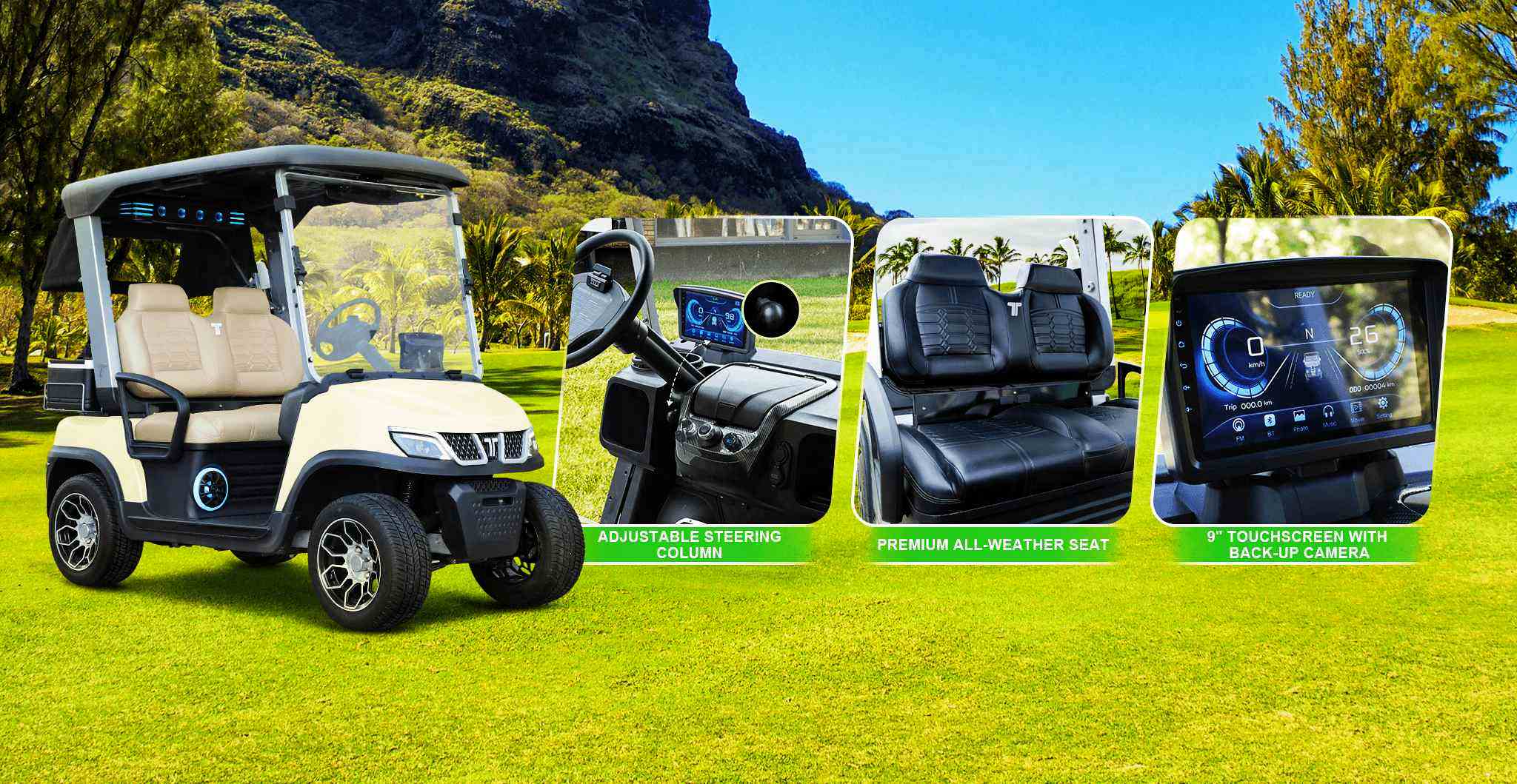
TARA Utility Task Vehicles (UTV) Product Positioning
Users typically focus on whether the vehicle is truly suitable for the course environment. Unlike ordinary mobility scooters, utility task vehicles for golf courses need to meet higher standards, such as being grass-friendly, providing a smooth ride, and having the capacity for long-term operation.
Tara’s products primarily target the following scenarios:
Golf player transportation
Resort and club transportation
Course operation and maintenance
Large-scale on-site transportation
Therefore, Tara not only offers standard electric utility task vehicles but also a variety of utility vehicles to help courses build a complete operational fleet.
For courses with large utility task vehicle fleets, this product structure better meets diverse operational needs.
Core Advantages of Electric Utility Task Vehicles
In the current golf course vehicle market, electric utility task vehicles have become the mainstream choice. Compared to traditional fuel vehicles, electric vehicles have significant advantages in several aspects:
Quieter Driving Experience
Golf courses require a quiet environment, and electric utility task vehicles operate with virtually no engine noise.
Lower Operating Costs
Electric vehicles have a relatively simple maintenance structure and do not require complex fuel system maintenance.
More Environmentally Friendly Energy Use
With the development of environmental policies, more and more courses are prioritizing electric utility task vehicles.
Tara’s Value in Course Fleet Management
For golf courses, vehicles are typically not purchased individually but managed as a utility task vehicle fleet. An 18-hole golf course typically requires dozens or even hundreds of utility task vehicles.
In this context, vehicle stability and management efficiency become paramount.
Professional utility task vehicle manufacturers consider the following factors:
Stability for continuous long-term use
Battery range
Easy-to-maintain vehicle structure
Chassis design suitable for course roads
By strategically configuring electric utility task vehicles and utility vehicles, courses can improve operational efficiency while maintaining a positive service experience.
The Role of Utility Vehicles on a Golf Course
Many TARA Utility Task Vehicles (UTV) Reviews focus not only on the carts used by players but also on the vehicles used for course operations.
Utility vehicles are typically used on a course for:
Transporting turf maintenance tools
Staff patrols
Transporting course equipment
Delivering tournament supplies
These vehicles typically have higher load capacity and practicality, making them an indispensable part of the daily operations of a course.
Therefore, some utility task vehicle manufacturers develop multiple utility vehicle models to meet the needs of course management.
Frequently Asked Questions (FAQ)
What are the main uses of Tara utility task vehicles?
Tara’s electric utility task vehicles are primarily used for short-distance transportation within golf courses, resorts, and large communities. The brand also offers utility vehicles for course maintenance and operations.
What is the typical range of electric utility task vehicles?
The range varies depending on the model. Generally, modern electric utility task vehicles can travel 40–60 kilometers on a full charge, sufficient for most courses’ operational needs.
How is a utility task vehicle fleet effectively managed?
Many courses manage their utility task vehicle fleets through digital management systems, including vehicle dispatching, maintenance records, and battery charging management. Proper fleet management can extend the lifespan of electric utility task vehicles and reduce operating costs.
What is the difference between a utility vehicle and a utility task vehicle?
Utility task vehicles are primarily used for player movement between courses, while utility vehicles are more geared towards work-related purposes, such as transporting equipment or maintenance tools. Both types of vehicles are typically used simultaneously within the same course fleet.
The Importance of Choosing a Professional Utility Task Vehicle Brand
For golf course operators, utility task vehicles are not just basic transportation; they are an integral part of the course’s service experience. Users often evaluate carts based on stability, comfort, and long-term maintenance costs.
With the continuous development of electric utility task vehicle technology, modern course vehicles are evolving towards higher efficiency, lower maintenance, and greater intelligence. Simultaneously, complete fleet solutions combining utility vehicles are making course management more efficient.
Therefore, when choosing a utility task vehicle brand, course managers typically prioritize utility task vehicle manufacturers with professional experience. By rationally planning the utility task vehicle fleet and selecting reliable vehicle solutions, courses can provide players with a smoother and more comfortable travel experience while improving overall operational efficiency.
Post time: Mar-09-2026