
From a professional operational perspective, “Best Cars for Golf Clubs” doesn’t refer to traditional cars, but rather to electric utility task vehicles (UTVs) and utility vehicles specifically designed for the golf course environment. They feature low noise, low maintenance costs, and high adaptability, meeting the dual needs of golf courses for player transportation and daily operations. Therefore, for modern golf clubs, choosing the right electric utility task vehicles and utility vehicles is truly the best vehicle solution.
As golf courses expand and service standards improve, more and more clubs are beginning to prioritize the overall planning of their vehicle systems. Complete solutions provided by professional utility task vehicle manufacturers are increasingly becoming key to efficient course operations.
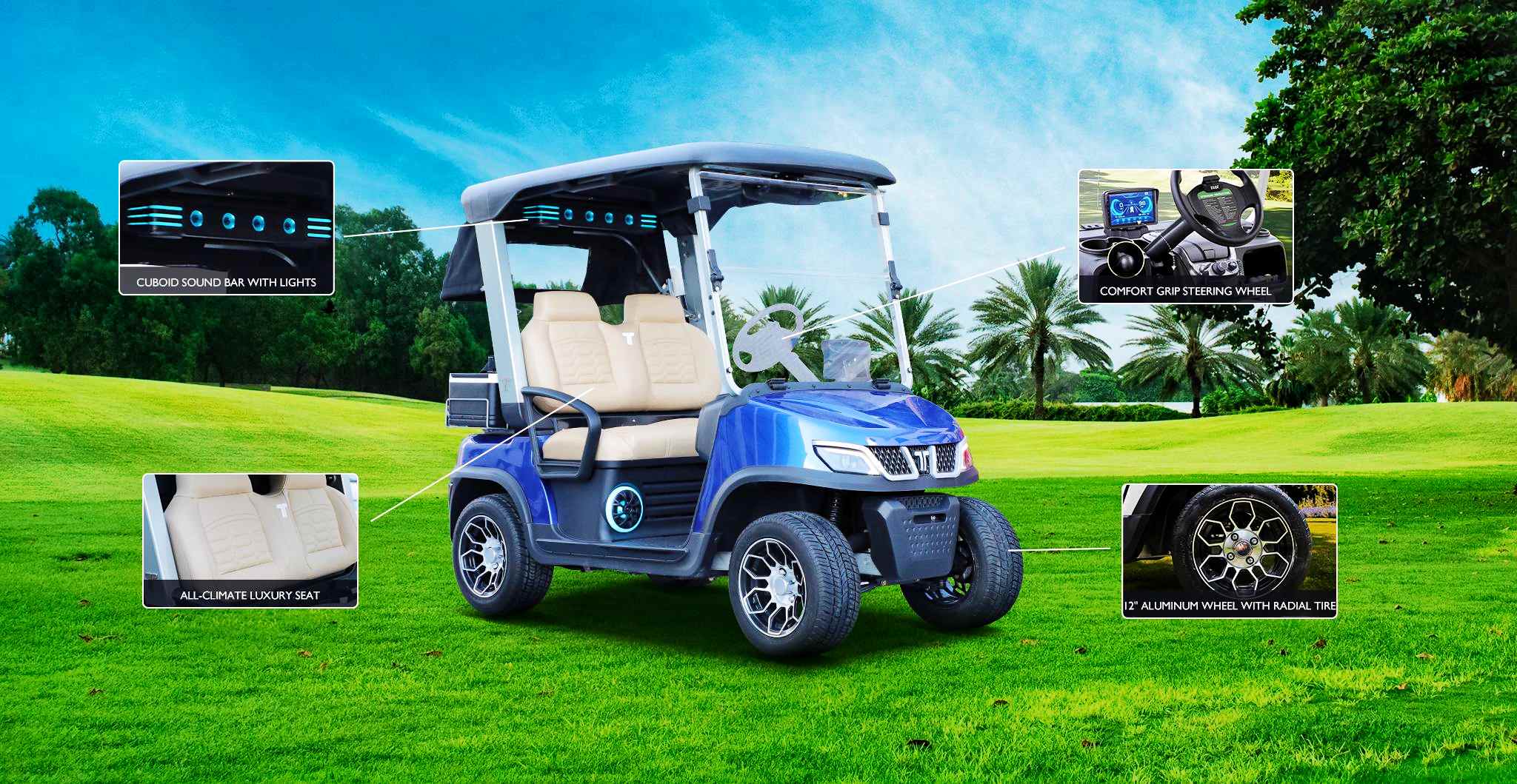
Why Electric Utility Task Vehicles are the First Choice for Golf Courses
Electric utility task vehicles are a core component of almost all mainstream golf courses. These vehicles are specifically designed for the golf environment, with designs and functions better suited to practical needs.
Quiet and Comfortable
Golf requires a quiet environment, and electric utility task vehicles operate with almost no noise, contributing to a better player experience.
Low Cost and Long-Term Operation
Compared to gasoline vehicles, electric utility task vehicles have lower energy costs and simpler maintenance structures, making them ideal for long-term use.
Adaptable to Course Terrain
Professional utility task vehicles for golf courses are better suited to grass and undulating terrain in their chassis and tire design.
Therefore, from a practical standpoint, electric utility task vehicles are a core component of Best Cars For Golf Clubs.
Utility Task Vehicle Fleet: Key to Course Service Capacity
For a standard 18-hole course, a complete utility task vehicle fleet is typically established to handle varying usage levels at different times.
An efficient utility task vehicle fleet requires:
Stable vehicle performance
A unified charging and maintenance system
Sufficient number of vehicles
Efficient dispatching capability
When a course has a high-quality electric utility task vehicle fleet, it not only improves its capacity but also reduces operational risks associated with breakdowns.
Utility Vehicles: The Unsung Force Behind Efficient Course Operations
Besides vehicles used by players, utility vehicles are equally indispensable in course operations. These vehicles are primarily used to support daily maintenance and management.
Typical applications include:
Transporting grass maintenance equipment
Staff patrols
Moving supplies and tools
Maintenance of course facilities
Compared to ordinary utility task vehicles, utility vehicles emphasize practicality and load-bearing capacity. A complete golf course vehicle system must include both electric utility task vehicles and utility vehicles.
What should you consider when choosing Best Cars for Golf Clubs?
In the actual procurement process, golf course managers typically evaluate multiple factors.
Vehicle Durability
High-frequency use environments require vehicles with long-term stable operation.
Battery Performance
Efficient battery systems directly affect the range and efficiency of electric utility task vehicles.
Maintenance Ease
Simple and easy-to-maintain vehicles can significantly reduce operating costs.
Manufacturer Strength
Experienced utility task vehicle manufacturers can provide more reliable products and long-term support.
These factors collectively determine whether a vehicle qualifies as a true Best Cars for Golf Clubs.
Frequently Asked Questions (FAQ)
Is Best Cars for Golf Clubs always electric utility task vehicles?
In most cases, yes. Due to their quietness, environmental friendliness, and low maintenance costs, electric utility task vehicles have become the mainstream choice for golf courses.
How many utility task vehicle fleets does a course need?
This depends on the size of the course. Generally, an 18-hole course typically requires 40–80 utility task vehicles, with larger courses requiring even more.
Are utility vehicles necessary?
For a normally operating course, utility vehicles are essential. They play a crucial role in maintenance, transportation, and logistical support.
How to reduce the operating costs of a utility task vehicle fleet?
By selecting high-quality electric utility task vehicles, optimizing charging management, and performing regular maintenance, overall operating costs can be effectively reduced.
A Key Step from Equipment Selection to Operational Upgrades
In the modern golf industry, vehicle systems have become a vital component of a course’s service capabilities. Choosing the right electric utility task vehicles and utility vehicles not only affects daily operational efficiency but also directly impacts the player experience.
With continuous technological advancements, more and more utility task vehicle manufacturers are offering more comprehensive vehicle solutions, optimizing everything from cart performance to utility task vehicle fleet management. This has transformed Best Cars For Golf Clubs from a single product into a complete, efficient, stable, and sustainable golf course vehicle system.
For golf clubs that pursue high-quality service, building such a vehicle system is an important step in enhancing their competitiveness.
Post time: Mar-28-2026