
From golf courses to resorts, electric carts are becoming the mainstream solution for short-distance transportation. Compared to traditional fuel-powered vehicles, electric vehicles offer advantages such as quieter operation, lower maintenance costs, and simpler operation, making them widely used in golf courses, resorts, communities, and large venues. For operators requiring high-frequency vehicle use, professionally designed electric utility task vehicles (UTVs) and utility vehicles not only improve efficiency but also optimize the overall service experience.
With the increasing trend towards environmental protection and low-carbon operations, more and more managers are considering electric carts as a long-term, reliable investment when choosing venue transportation. Professional utility task vehicle manufacturers like Tara are meeting the diverse needs of golf courses and commercial venues by providing high-quality electric vehicles.
Why Electric Carts are Replacing Traditional Vehicles
Traditional fuel-powered vehicles have been used in many venues, but with technological advancements, the advantages of electric carts are becoming increasingly apparent.
Quieter Operating Environment
On golf courses or in resorts, noise directly impacts the customer experience, while electric carts generate virtually no engine noise.
Lower Energy Costs
Electricity costs are typically lower than fuel costs, making them more economical in the long run.
Simpler Maintenance Structure
Electric vehicles do not require complex engine systems for maintenance, reducing operational complexity.
A More Environmentally Friendly Option
No exhaust emissions make electric carts an essential component of sustainable operations.
These features make electric carts ideal for golf courses and large facilities.
Electric Utility Task Vehicles: Course Transportation
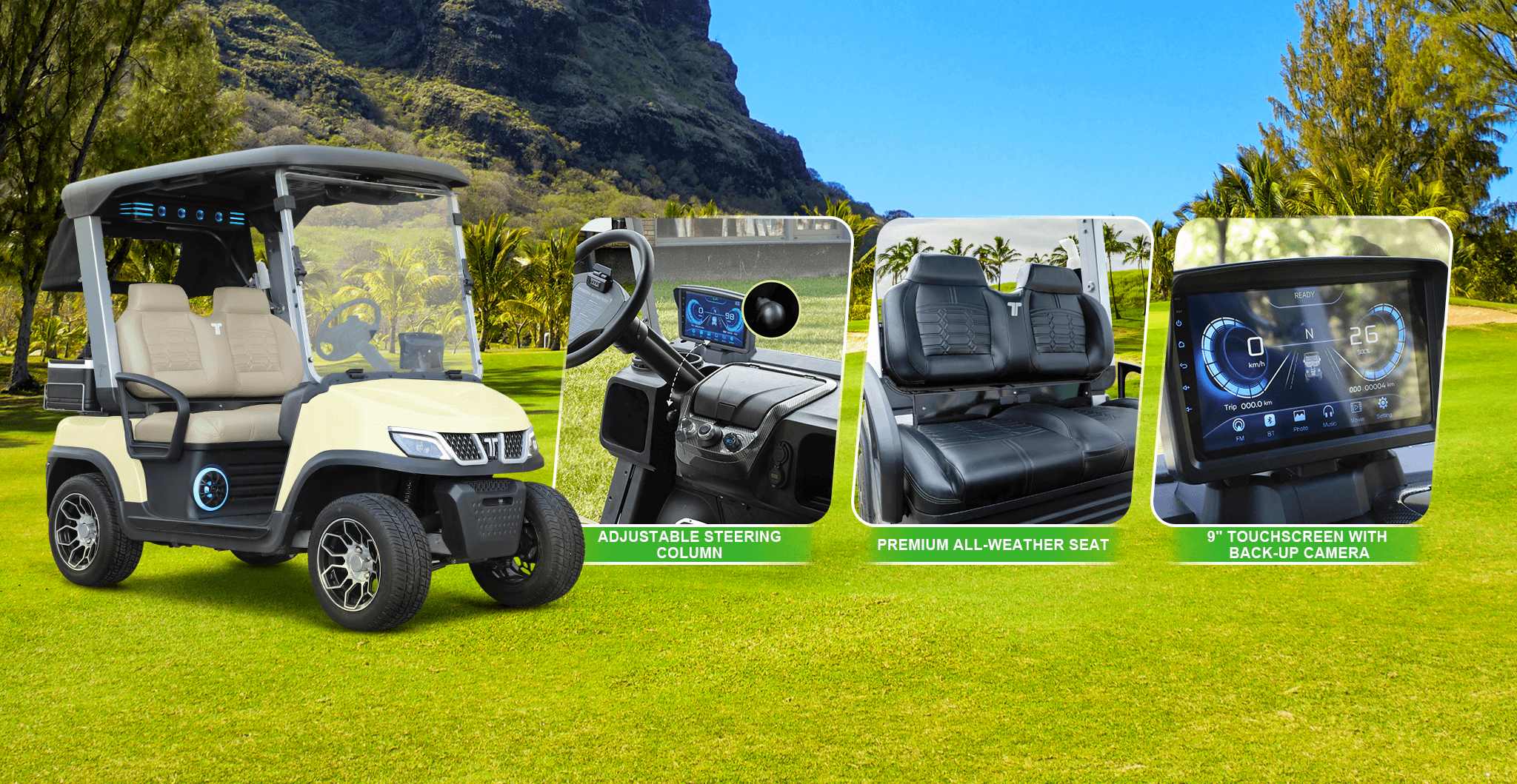
The most common type of electric cart in the golf industry is the electric utility task vehicle. They are specifically designed for the course environment, enabling smooth travel between greens and fairways.
Professional utility task vehicles for golf courses typically feature:
Green-friendly tire design
Stable low-speed handling performance
Bag securing devices
Comfortable riding experience
For players, high-quality electric utility task vehicles can significantly improve comfort and efficiency during a game. Therefore, courses often prioritize dedicated electric carts when procuring them.
Utility Task Vehicle Fleet: Key to Scaled Operations
Large courses or resorts typically do not use only a few vehicles but rather establish a complete utility task vehicle fleet. The size of a utility task vehicle fleet depends on the course size and visitor volume; an 18-hole course often requires dozens or more carts.
An efficient utility task vehicle fleet offers several advantages:
Increased capacity
Reduced wait times
Unified maintenance and management
Lower per-cart operating costs
Professional utility task vehicle manufacturers typically provide fleet configuration advice and after-sales support to help clients achieve long-term stable operation.
Utility Vehicles: Indispensable electric vehicles
Besides vehicles used by players, many courses rely on utility vehicles for daily operations. These electric carts emphasize load capacity and practicality.
Common uses include:
Transporting lawn maintenance equipment
Staff inspections
Material handling
Facility maintenance
On a golf course, utility vehicles and electric utility task vehicles work together to form a complete transportation system.
Frequently Asked Questions (FAQ)
What is the typical speed of electric carts?
Most electric carts are designed for speeds between 15–25 km/h, a range that ensures both efficiency and safe operation on the course.
What is the range of electric utility task vehicles?
Modern electric utility task vehicles typically have a range of 40-60 kilometers on a full charge, sufficient for the operational needs of a course or facility.
Are electric carts suitable for complex outdoor environments?
Electric carts designed specifically for golf courses generally possess good stability and maneuverability, capable of traversing various surfaces such as grass and paved roads.
What is the difference between a utility vehicle and a regular utility task vehicle?
Utility task vehicles are primarily used for personnel transport, while utility vehicles are better suited for moving equipment and performing tasks, typically with a greater load capacity.
Key Equipment for Enhanced Experience
With the shift in modern facility management concepts, electric carts have evolved from simple transportation tools into crucial equipment for improving service quality. Whether at golf courses, resorts, or large parks, stable and reliable electric vehicles can significantly improve operational efficiency.
High-quality electric utility task vehicles provide customers with a comfortable and quiet mobility experience, while practical utility vehicles ensure smooth daily operation of the facility. By rationally planning a utility task vehicle fleet, operators can improve overall service levels while reducing costs.
For venues pursuing efficiency and sustainable development, choosing electric carts from a professional utility task vehicle manufacturer is not only an equipment procurement decision but also a crucial component of their long-term operational strategy. With continuous advancements in electric technology, electric carts are becoming an indispensable core transportation solution for modern golf courses and commercial facilities.
Post time: Mar-19-2026